

Copyright © 2026 Xiamen Junssen Intelligent Technology Co., Ltd. All Rights Reserved.
Links Sitemap RSS XML Privacy Policy
ECG electrode pads are small but essential components used to connect a patient's skin with an electrocardiogram device. They help detect and transmit the body's electrical signals so that the ECG system can record the heart's activity.
Because they directly affect skin contact and signal transmission, the condition of an ECG electrode pad is important. This raises two common questions: Can expired ECG electrode pads still be used? And can an ECG electrode pad that has already been used be applied again?
For disposable ECG electrode pads, the answer is generally no. Expired ECG electrode pads should not be used, and used disposable ECG electrode pads should not be reused. Changes in adhesive performance, conductive materials, and skin contact can affect the stability of ECG signal collection.
An ECG electrode pad is made from several components, including a backing material, adhesive, conductive element, conductive gel or hydrogel, and protective liner. Each part is designed to maintain certain performance characteristics during the product's stated shelf life.
As time passes, the materials in an ECG electrode pad can gradually change. The adhesive may become less effective, while the conductive gel may lose moisture or change consistency. These changes are not always obvious from the outside.
This is why an ECG electrode pad that looks normal does not necessarily mean that it will perform like a new product.
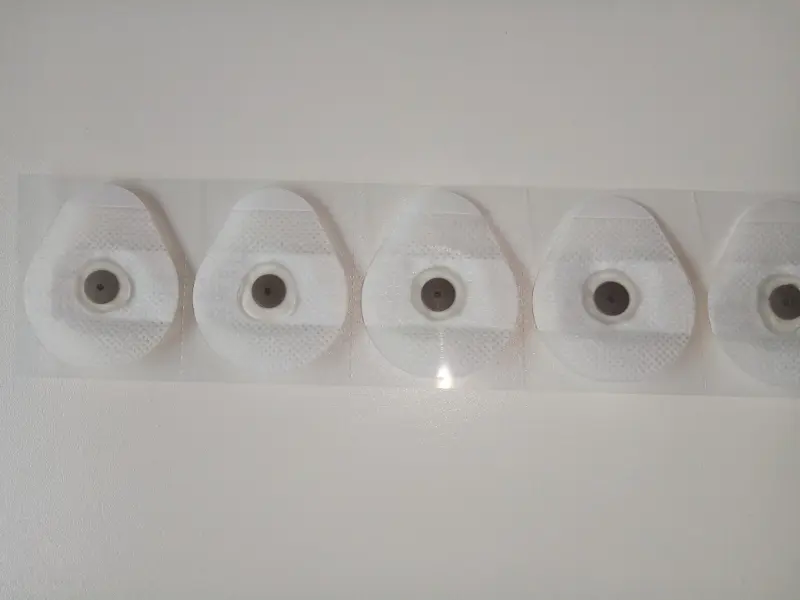
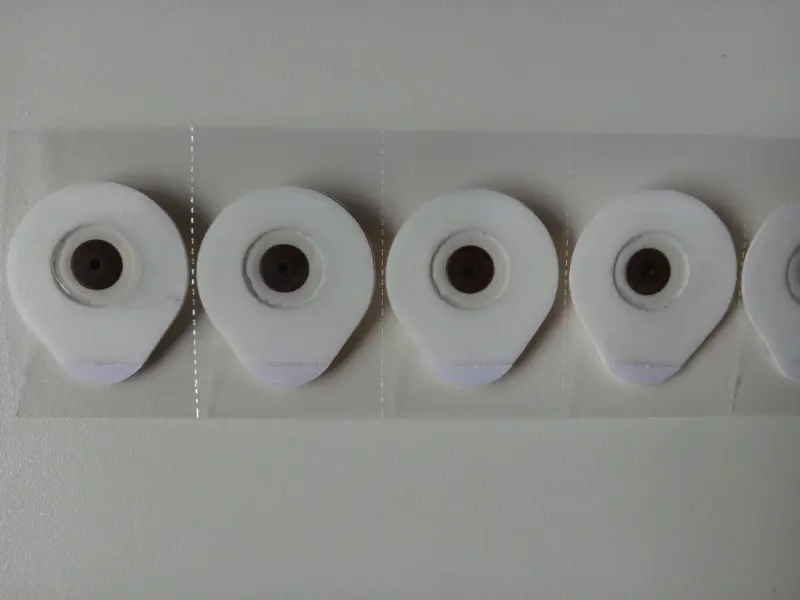
One of the most noticeable problems with an expired ECG electrode pad is reduced adhesion.
A new ECG electrode pad is designed to remain securely attached to clean, dry skin during its intended period of use. When the adhesive loses part of its original performance, the ECG electrode pad may not stick properly or may begin to lift from the skin.
Poor adhesion can become especially noticeable when the patient moves, sweats, or when the ECG electrode pad is placed on an area that experiences frequent movement.
Another concern is the conductive gel. The gel helps create an electrical interface between the skin and the ECG electrode pad. If the gel dries out or changes physically over time, skin contact may become less consistent.
This may contribute to unstable electrical performance and unwanted noise in the ECG signal.
Therefore, expired ECG electrode pads should not simply be judged by whether they are still sticky. Their electrical and physical performance may no longer meet the original specifications.
The same principle applies to disposable ECG electrode pads that have already been used.
When an ECG electrode pad is applied to the skin, the adhesive surface comes into contact with skin oils, moisture, and other substances. When it is removed, some of the adhesive performance may also be lost.
Trying to apply the same ECG electrode pad again can result in weaker adhesion and less stable contact with the skin.
Even if the ECG electrode pad appears clean and sticks for a short time, that does not mean it will perform in the same way as a new product.
Many disposable ECG electrode pads are specifically labeled for single use. Manufacturer instructions for disposable ECG electrode pads commonly state that they should not be reused and should not be used after the expiration date.
Using a new ECG electrode pad for each application helps maintain the intended level of contact and performance.
It is easy to think of the adhesive as simply something that keeps the ECG electrode pad attached. In reality, stable contact with the skin also plays an important role in signal quality.
The skin and ECG electrode pad interface is part of the electrical measurement system. When contact becomes unstable, movement and changes in contact conditions can introduce interference into the recorded signal.
An ECG electrode pad can therefore be physically attached to the skin while still providing less stable electrical performance than a fresh product.
The FDA identifies several electrical performance characteristics for ECG electrode pads, including impedance, offset stability, and internal noise. These characteristics are important when evaluating ECG electrode pad performance.
This is one reason why replacing expired or used disposable ECG electrode pads is preferable to trying to extend their use beyond the intended conditions.
The expiration date assumes that the product has been stored according to the manufacturer's recommendations.
High temperatures, excessive humidity, unsuitable storage environments, and damaged packaging may affect the materials used in ECG electrode pads.
Adhesives and conductive gels can be particularly sensitive to environmental conditions. If the packaging is damaged or improperly sealed, the ECG electrode pad may be exposed to moisture or air that can accelerate changes in the product.
For users, the basic practice is simple: keep ECG electrode pads in their original packaging, follow the recommended storage conditions, check the expiration date, and inspect the product before use.
The final performance of an ECG electrode pad depends heavily on how it is manufactured.
Although an ECG electrode pad looks like a relatively simple medical product, its production can involve multiple processes, such as material feeding, coating, drying, cutting, assembly, inspection, and packaging.
Small variations during these processes can affect the finished product. For example, inconsistent coating may lead to differences between individual ECG electrode pads, while inaccurate cutting or positioning can affect the final shape and assembly.
Adhesive and conductive materials also need to be applied consistently. Proper packaging is equally important because it protects finished ECG electrode pads during storage and transportation.
For this reason, automation and process control have become increasingly important for manufacturers of medical ECG electrode pads.
A modern ECG Electrode Production Machine can integrate different manufacturing processes according to the structure and production requirements of ECG electrode pads.
Depending on the production line configuration, equipment may be used for material feeding, coating, precision cutting, assembly, inspection, and packaging.
Automation can reduce repetitive manual work and improve consistency between production batches. More importantly, it allows manufacturers to control key processing parameters more accurately.
For manufacturers producing large quantities of ECG electrode pads, stable and repeatable production is essential. A high production speed is useful, but consistent product quality is equally important.
A well-designed ECG Electrode Production Machine should therefore be selected according to the ECG electrode pad structure, materials, required capacity, automation level, and quality standards of the manufacturer.
Final inspection is important, but product quality should not depend entirely on checking finished ECG electrode pads.
Stable quality starts with suitable raw materials and controlled manufacturing processes. Feeding, coating, cutting, assembly, inspection, and packaging should all be properly coordinated.
Depending on the product and market requirements, manufacturers may evaluate adhesion, dimensions, electrical properties, appearance, packaging integrity, and shelf-life stability.
A complete automated production system can help manufacturers establish a more controlled workflow and reduce unnecessary variation during production.
For companies planning to expand their ECG electrode pad manufacturing capacity, investing in the right ECG Electrode Production Machine can support both production efficiency and process consistency.
Before applying a disposable ECG electrode pad, several basic checks are important.
First, check the expiration date on the package. Second, make sure the packaging is intact and properly sealed. Third, inspect the ECG electrode pad for visible damage, drying, contamination, or other abnormalities.
The skin should also be properly prepared according to the manufacturer's instructions. Clean and dry skin generally provides a better surface for ECG electrode pad application.
Most importantly, disposable ECG electrode pads should be used according to their labeling and instructions for use.
An expired ECG electrode pad may have reduced adhesive strength or less stable conductive performance. A used disposable ECG electrode pad may also have weaker adhesion and a less reliable skin-electrode interface.
For both users and manufacturers, consistency is important. Users need ECG electrode pads that perform as intended, while manufacturers need production systems capable of delivering stable quality from one batch to the next.
Copyright © 2026 Xiamen Junssen Intelligent Technology Co., Ltd. All Rights Reserved.
Links Sitemap RSS XML Privacy Policy