

Copyright © 2026 Xiamen Junssen Intelligent Technology Co., Ltd. All Rights Reserved.
Links Sitemap RSS XML Privacy Policy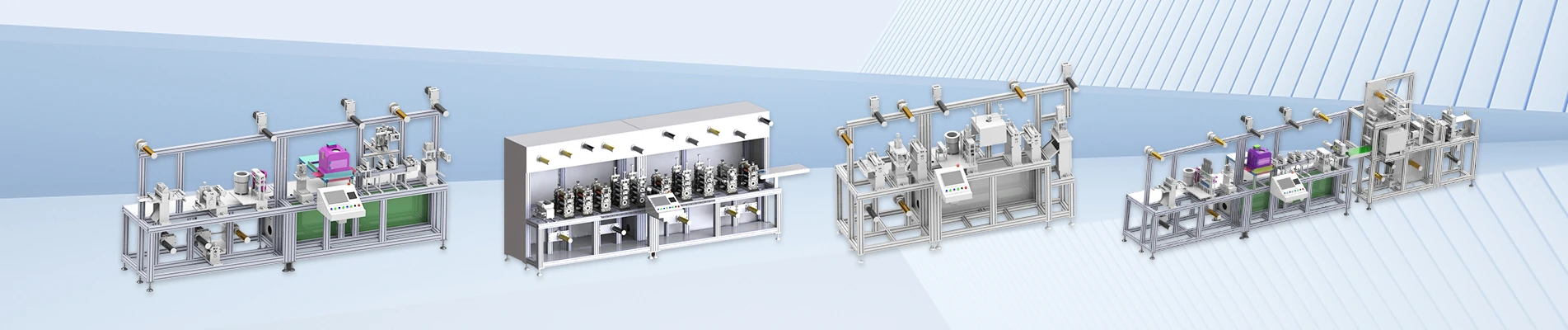
Junssen provides customized automation solutions, including industrial robot applications, vision system applications, non-standard automation equipment development and manufacturing, and automation control engineering. Our solutions cover automated equipment assembly inspection, printing and packaging, sorting, alignment, tracking, and other processes. We also offer linear modules and linear slide table robotic arms, which are widely used in manufacturing and service industries such as printing and packaging, electronics and electrical appliances, medical, toys, hardware, and more.
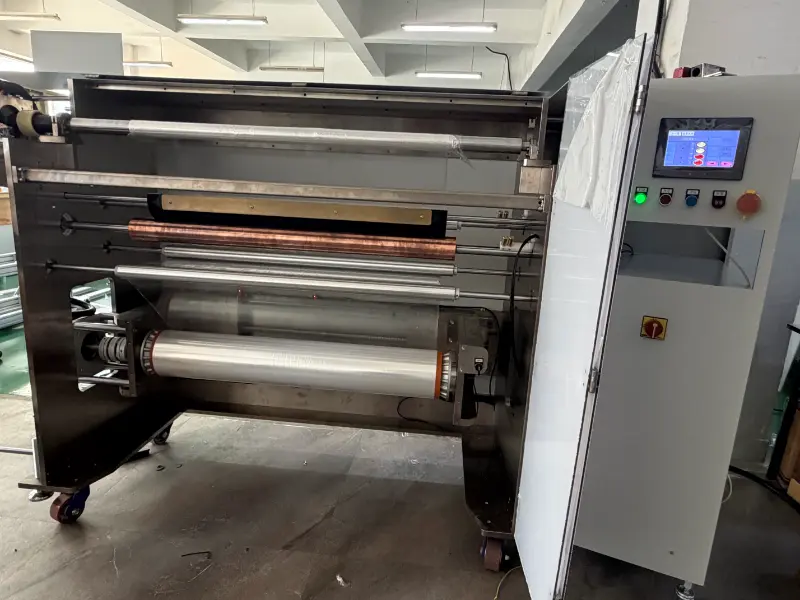
1. Customization: Completely designed based on customer's process, product structure, production capacity requirements, etc., with no universal models.
2. Small batch/single unit manufacturing: The Bespoke automation machine may be independently designed, making it difficult to reduce costs through mass production.
3. Flexible functions: Functions can be added or adjusted as needed to adapt to multi-variety and small-batch production.
4. Strong industry pertinence: The overall design is adjusted according to specific application scenarios and industry production rules, to better match the actual production needs of customers in different industries.
5. Higher integration requirements: We reasonably integrate multiple functional units and supporting devices into one set of equipment, to improve production efficiency and save workshop space.
6. Higher accuracy standards: We adopt precise control systems and processing technology to ensure that the equipment can maintain stable output accuracy in long-term continuous operation.
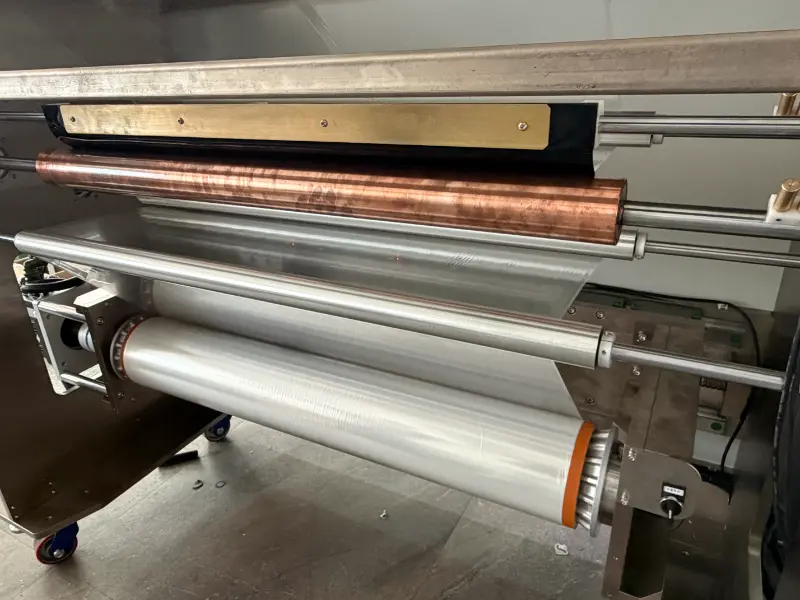
1. Precisely meets the requirements of special processes, addressing issues that standard equipment cannot cover.
2. OEM special-purpose automation machines support flexible production, suitable for multiple varieties and small batches.
3. Enhances efficiency, reduces defective rates, and decreases reliance on manual labor.
|
Comparison Dimension |
Standard Equipment |
Non-Standard Equipment |
|
Definition |
Mass-produced mechanical equipment or production facilities designed, manufactured and tested in accordance with unified industry specifications and national/industry standards. They can be directly purchased from the market for general production scenarios. |
Custom-developed and manufactured equipment tailored for specific production processes, functional requirements or enterprise-specific production scenarios. It cannot be mass-produced, and there is no unified industry standard to follow, and each set of equipment has unique design parameters and structural design. |
|
Design & Development |
Unified design drawings and development standards. Manufacturers can mass produce according to fixed design schemes, the development cycle is short, and the design cost is shared by mass products, so the unit design cost is low. |
One-to-one customized design according to customer's specific requirements. R&D engineers need to complete targeted structural design, function matching and process verification, the development cycle is long, and all R&D costs are borne by a single order, so the overall R&D cost is high. |
|
Production Mode |
Mass production on assembly lines, with stable production process, mature manufacturing technology and short delivery cycle. Manufacturers can prepare raw materials and semi-finished products in advance according to market forecasts, effectively shortening the waiting time for customers. |
Single-piece small-batch production, each order requires separate raw material procurement, processing and assembly. The production process needs to be adjusted according to the design scheme of each equipment, the manufacturing process is complex, and the delivery cycle is usually much longer than that of standard equipment. |
|
Scope of Application |
Suitable for general production links and common process requirements, widely used in mass production scenarios in various industries. It can meet the general functional requirements of most enterprises, but cannot adapt to special process or customized production scenarios. |
Suitable for special production links, personalized process requirements or small-batch customized production. It is often used to solve the production problems that cannot be solved by standard equipment, such as special size processing, specific functional integration, special production environment adaptation, etc. |
|
Price & Cost |
Due to mass production and scale effect, the unit price is relatively low, and the price is transparent. Users can directly compare prices through the market, and the later use cost is also relatively stable. |
Due to customized R&D and single-piece manufacturing, the overall price is significantly higher than that of standard equipment of the same power level. The price is determined according to the functional requirements and processing difficulty, and there is no uniform market price. |
|
After-sales & Maintenance |
Spare parts are uniformly produced, easy to purchase and replace, maintenance procedures are standardized, and after-sales service response speed is fast. Most manufacturers provide standardized after-sales service terms, and maintenance costs are low. |
Spare parts are non-universal and need to be customized for reprocessing, the maintenance cycle is long, and the maintenance cost is high. After-sales service needs to be targeted according to the customized structure of the equipment, which requires higher professional ability of maintenance technicians. |
|
Upgrade & Iteration |
The product iteration is carried out by the manufacturer according to the unified planning. When users need to upgrade, they usually replace the whole equipment directly, and the iteration cost is clear. |
It can be upgraded and modified according to the changes of the user's subsequent production process. On the premise of retaining the main structure, only the functional modules are adjusted, which can better adapt to the long-term change of production requirements of the enterprise. |
|
Lead Time |
Most finished products are in stock, which can be delivered immediately after order confirmation, and the delivery cycle is usually within 1 to 15 days. |
It needs to go through R&D design, raw material procurement, processing and assembly, and functional debugging. The delivery cycle is usually 30 to 180 days, and some complex customized equipment even takes longer. |
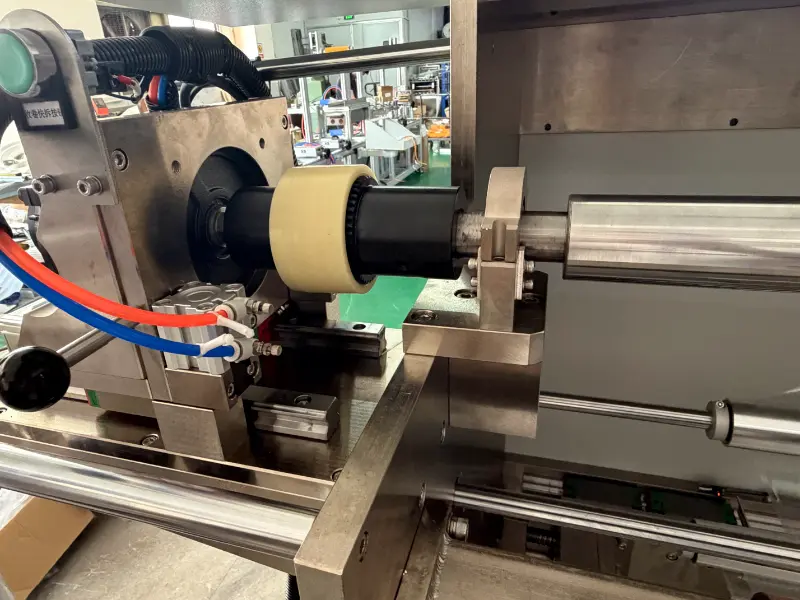
According to the customer's requirements, both parties communicate about the product concept→the plan→modeling→drawing→processing→assembly→delivery→ debugging
Copyright © 2026 Xiamen Junssen Intelligent Technology Co., Ltd. All Rights Reserved.
Links Sitemap RSS XML Privacy Policy