

Copyright © 2026 Xiamen Junssen Intelligent Technology Co., Ltd. All Rights Reserved.
Links Sitemap RSS XML Privacy Policy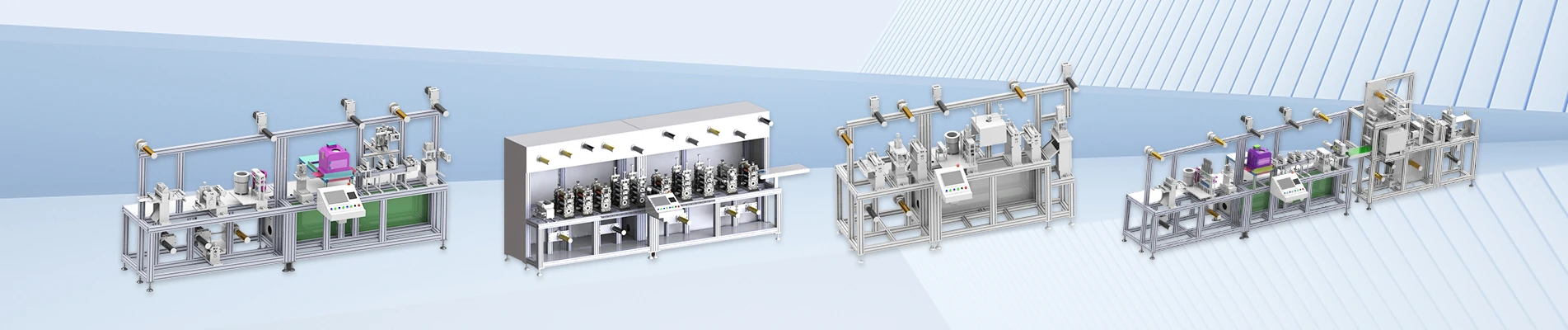
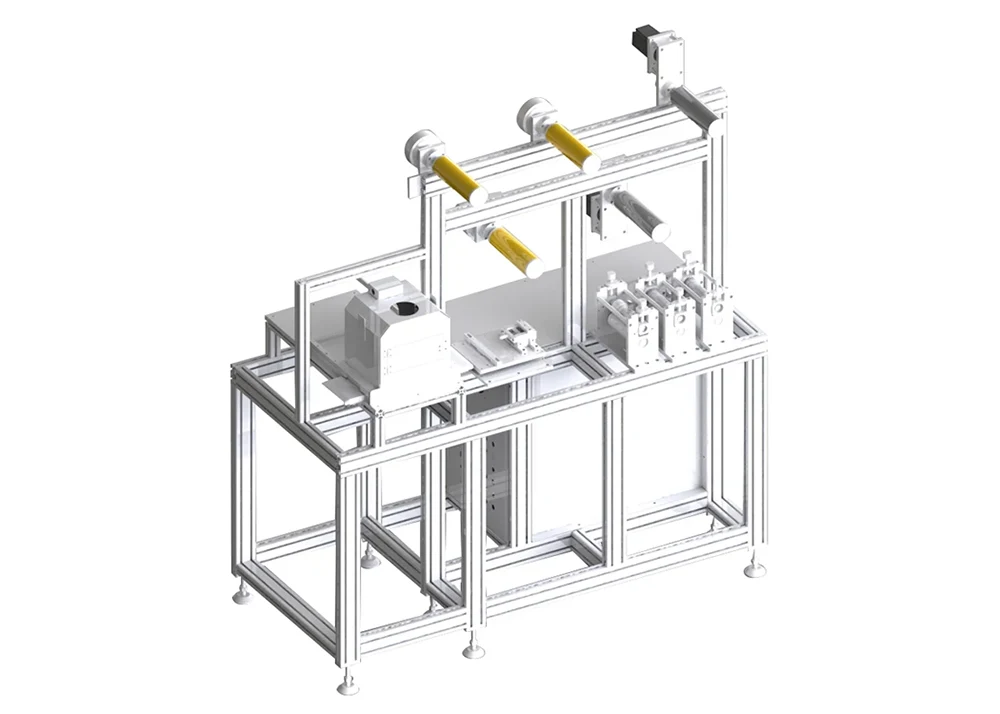
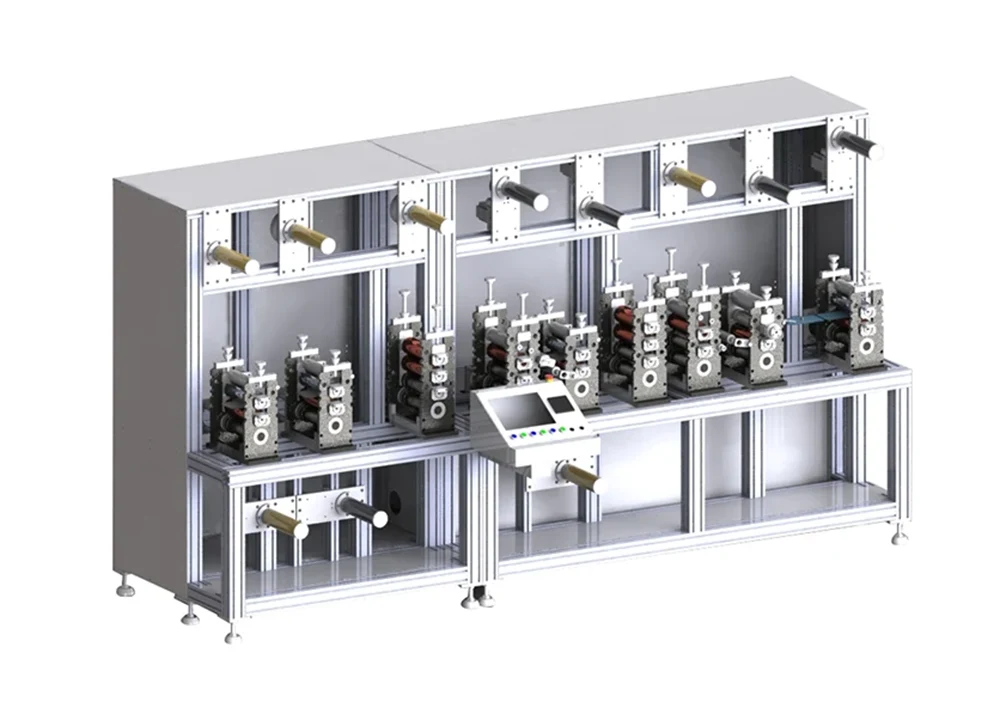
Junssen's equipment undergoes strict testing before shipment. Interested customers are welcome to contact us for aquotation! The In-line Coating Tab ECG Electrode Production Machine is compact in size and easy to operate. The equipment is equipped with a coating mechanism, which directly applies the coating, cures it, and then performs the shape and finished product die-cutting. The production speed of the equipment can be adjusted according to the curing effect of the hydrogel.
ECG Tab Electrode Making Machine:Base material unwinding - Conductive hydrogel - UV curing - Fastening assembly - Shape die-cutting - Finished product and winding
Base material unwinding is the initial preparatory step of the entire production process, which aims to stably feed the coiled raw base material into the subsequent processing line. The base material is usually pre-rolled on a rigid inflatable or mechanical core shaft, which is mounted on an adjustable automatic tension control unwinding station. Before formal unwinding, operators will calibrate the position of the base material through edge position control (EPC) systems to correct deviation and ensure the base material enters subsequent processes at a consistent, accurate center line(Optional Configurations). The automatic tension control system maintains constant pulling force on the base material throughout unwinding, avoiding problems such as loose wrinkling or overstretching deformation that would affect subsequent processing accuracy. For different base material types (such as flexible PET film, non-woven fabric or foam substrate), the unwinding speed and tension parameters are adjusted in advance to match the processing speed of downstream procedures, guaranteeing continuous, uninterrupted production.
After conductive coating is completed, the wet coated base material immediately enters the UV curing tunnel to complete rapid curing and forming. UV curing is an efficient energy curing technology: under the irradiation of high-intensity ultraviolet light with specific wavelength (usually 200-400nm), the photoinitiator in the conductive coating formula decomposes to generate free radicals, which initiates crosslinking polymerization of polymer binders, converting the liquid coating into a solid, tightly bonded conductive film in tens of seconds or even seconds. The UV curing system is equipped with adjustable power UV lamps and temperature control devices, which can adjust irradiation intensity and line speed according to coating thickness and formula composition to avoid incomplete curing or over-curing brittleness. Compared with thermal drying, UV curing has the advantages of fast processing speed, low energy consumption and small footprint, and will not cause excessive deformation of heat-sensitive base materials, while ensuring the bonding force between conductive coating and base material, and the stability of conductive network structure.
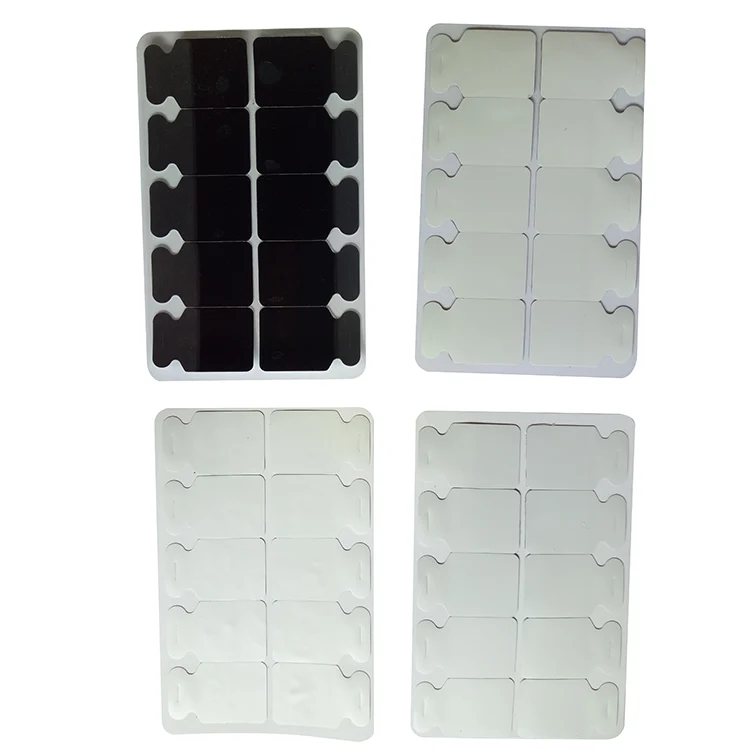
Shape die-cutting is a forming processing step that cuts the assembled integrated semi-finished product into the specified geometric shape and size according to product design requirements. This step uses a precision flat die-cutting machine or rotary die-cutting machine matched with a custom-made sharp steel rule die (or laser die-cutting equipment for complex fine shapes). Under the set pressure and feeding speed, the die cuts through the functional layers and base material completely (or completes half-cutting according to requirements, retaining the backing protection layer), and removes the excess waste skeleton material while discharging automatically. High-precision die-cutting ensures that the dimensional error of the product is controlled within a very small tolerance range, and the cutting edge is smooth without burrs, delamination or burr deformation, which meets the assembly and use requirements of the final product. For products with complex internal structures such as hollow positioning holes and special-shaped contours, multi-station progressive die-cutting is used to complete all forming processes at one time to ensure processing efficiency and accuracy.
Finished product and winding is the final procedure of the entire production process for roll-based finished products. After die-cutting molding, the finished products are inspected through online automatic inspection systems, which detect and mark defective products with unqualified dimensions, poor coating, missing parts or burr defects. Qualified finished products are then wound neatly onto a specified packaging core shaft through an automatic winding station. Similar to the unwinding step, the winding station also adopts automatic tension control and neat edge alignment devices to ensure the wound finished product roll is neat, tight, no wrinkling or deviation, which is convenient for subsequent transportation, storage and downstream use. For sheet-shaped finished products, this step will automatically count and stack the die-cut finished sheets, and then enter packaging; for coiled finished products, after winding is completed, the roll is labeled with product specification, batch number and production date, and then sealed and packaged for storage and delivery.
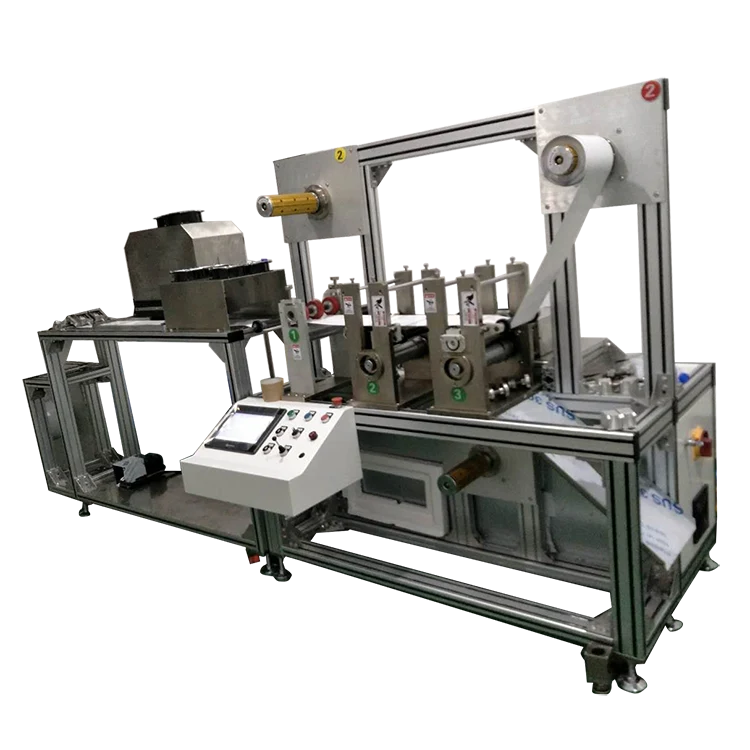
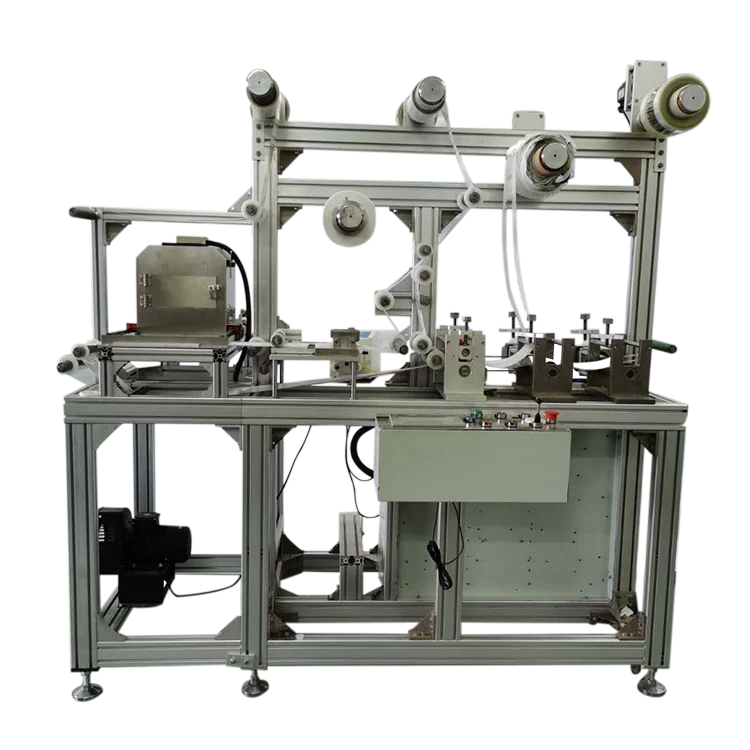
This equipment employs an integrated, continuous, in-line coating and forming process, eliminating the traditional offline, segmented processing model involving adhesive preparation, lamination, and die-cutting. The entire production line uses roll-form substrate as the carrier and, following a unified material flow path, sequentially completes the fully automated, continuous operations of unwinding, in-line coating of conductive adhesive, UV curing, high-precision die-cutting, and rewinding of finished products; The entire process is coordinated and controlled by a PLC in conjunction with closed-loop control systems for web guidance, tension, and thickness, completing the transformation of ECG electrode semi-finished products into finished goods in a single pass. This ensures consistent thickness of the conductive adhesive layer, precise positioning dimensions, and uniform electrical conductivity from the outset.
|
Comparison Item |
Junssen In-line Gluing ECG Tab Electrode Machine |
Traditional Offline Discrete Processing Equipment |
|
Production Flow |
Integrated continuous one-line production, no manual transfer between stations |
Multiple independent separate machines, manual material handling between processes |
|
Product Quality Risk |
Low risk of material pollution, dimensional deviation & human error |
High risk of contamination, size inconsistency and operation defects |
|
Key Parameter Control |
Closed-loop automatic control for coating thickness, curing energy, cutting precision |
No unified closed-loop control; unstable batch-to-batch parameters |
|
Finished Electrode Performance |
Uniform conductive layer, reliable snap, consistent clinical signal |
Uneven coating, unstable signal, inconsistent product performance |
|
Production Efficiency & Labor Cost |
High throughput, greatly reduced labor expenses |
Slow cycle, heavy labor demand, higher labor cost |
|
Production Flexibility |
Support both large mass orders & small-batch customized products; quick mold & parameter switch |
Poor flexibility; time-consuming rework for different electrode specifications |
|
Applicable Scenarios |
Large standardized mass production + special customized small batches |
Only simple single-specification mass production |
An In-line Coating Tab ECG Electrode Production Machine is designed for the automatic production of tab-style ECG electrodes. It combines continuous material feeding, coating, cutting, and assembly processes to help manufacturers achieve efficient and consistent electrode production.
The in-line coating process enables continuous and precise application of conductive gel or adhesive materials during production. It helps improve coating consistency, reduce material waste, and maintain stable product quality.
The machine can process various materials used in ECG electrode manufacturing, including conductive gel, adhesive layers, foam substrates, conductive films, and tab components. Material compatibility can be adjusted according to specific product requirements.
By integrating multiple production steps into one automated process, the equipment reduces manual handling, improves processing speed, and ensures stable output. It is suitable for manufacturers requiring reliable mass production of ECG electrodes.
Yes. The equipment can be configured according to different electrode sizes, shapes, and production requirements. Customized molds and production parameters can be provided to meet different customer applications.
The equipment uses a controlled coating system to maintain uniform material application. Stable feeding and precise processing help ensure consistent electrode performance and reduce quality variations during production.
Yes. The machine is designed for convenient operation and maintenance. Its optimized structure helps reduce cleaning time, minimize downtime, and support long-term stable production.
Yes. Junssen provides professional technical support, equipment customization, installation guidance, and after-sales service based on customers’ production requirements to ensure smooth operation and efficient manufacturing.
Copyright © 2026 Xiamen Junssen Intelligent Technology Co., Ltd. All Rights Reserved.
Links Sitemap RSS XML Privacy Policy