

Copyright © 2026 Xiamen Junssen Intelligent Technology Co., Ltd. All Rights Reserved.
Links Sitemap RSS XML Privacy Policy
As demand for professionally decorated balloons continues to grow in the global party supplies market, manufacturers need reliable equipment to produce consistent, residue-free adhesive dots at scale. Junssen, a specialized manufacturer of industrial automation and hot melt dispensing equipment in China, independently develops the Balloon Adhesive Dot Labeling Machine to help manufacturers achieve efficient, continuous, and precise production of double-sided adhesive dots for balloons. With an integrated roll-to-roll production process, automatic winding structure, and PID temperature control, this equipment provides a practical solution for businesses seeking to improve production efficiency and finished product consistency.
Article Summary: This article explores how a Balloon Adhesive Dot Labeling Machine works, its major functional modules, key technical specifications, and advantages for balloon decoration manufacturers. It also explains the importance of adhesive coating precision, temperature stability, automatic winding, and equipment selection when investing in an industrial glue dot production line.
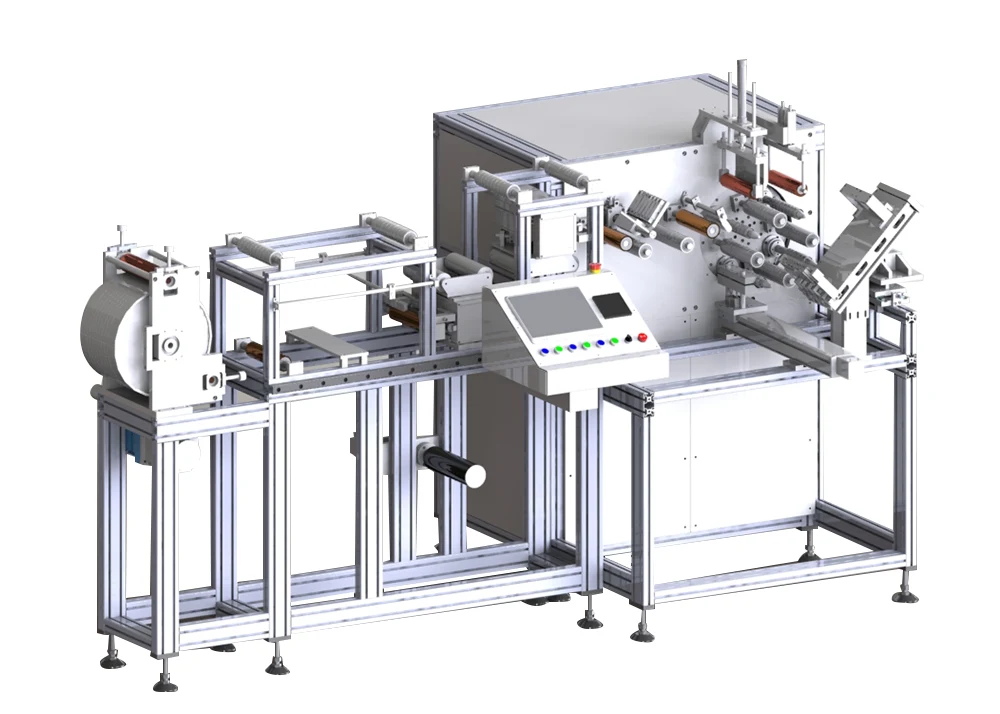
1. What Is a Balloon Adhesive Dot Labeling Machine?
3. What Are the Main Components of the Equipment?
4. Key Technical Specifications and Performance
5. What Are the Main Advantages of Automated Production?
6. Applications in the Balloon and Party Supplies Industry
7. How to Choose the Right Adhesive Dot Production Machine?
8. Why Are Temperature and Coating Precision Important?
A Balloon Adhesive Dot Labeling Machine is specialized industrial equipment designed to manufacture double-sided adhesive dots used for balloon attachment, party decoration, and other lightweight decorative applications. Unlike conventional labeling equipment that applies pre-made labels onto finished products, this type of machine focuses on producing adhesive dot materials through a continuous hot melt coating and roll-processing operation.
The finished adhesive dots are typically supplied in continuous rolls. Depending on production requirements, a single roll can contain several meters to hundreds of meters of adhesive dot material. These products can be integrated into automated labeling and decoration equipment or manually torn off by end users when needed.
For balloon manufacturers and party decoration suppliers, roll-type adhesive dots offer several practical benefits:
Junssen's equipment is specifically developed for roll-type balloon adhesive dot production, providing manufacturers with an integrated solution for coating, cooling, forming, and automatic winding.
The working principle of a Balloon Adhesive Dot Labeling Machine is based on controlled hot melt adhesive dispensing and continuous roll-to-roll processing. Instead of producing individual adhesive dots through separate manual operations, the machine processes the substrate continuously, allowing multiple production stages to work together.
The production process generally includes the following stages:
The integrated process helps reduce manual handling between production stages. It also allows manufacturers to maintain more consistent processing conditions throughout the production run.
For businesses producing large quantities of balloon glue dots, this continuous manufacturing approach can provide better production organization than separate sheet-fed processing operations.
The production performance of an industrial adhesive dot machine depends on how effectively its individual modules work together. Junssen's Balloon Adhesive Dot Labeling Machine incorporates several functional units designed to support stable material transportation, accurate adhesive dispensing, and uninterrupted finished product collection.
The unwinding unit supplies the base material continuously throughout the production process. An automatic tension control system helps maintain stable material movement and reduces the possibility of wrinkles, deviation, or uneven feeding.
The substrate bonding section also supports the lamination of upper and lower protective films, helping establish the required material structure before adhesive coating.
The coating unit is the core functional section of the equipment. It uses a high-precision gear pump adhesive supply system combined with controlled heating to dispense hot melt glue consistently.
By controlling adhesive delivery and coating parameters, manufacturers can produce regularly arranged glue dots with more consistent adhesive volume, spacing, and thickness.
After coating, the material enters the cooling section. This stage allows the hot melt adhesive dots to cool and stabilize before subsequent processing.
Effective cooling helps prevent deformation or unwanted adhesion during transportation, supporting the production of removable adhesive dots with a clean peeling performance.
The forming and cutting unit processes the continuously coated composite material according to the required finished specifications. It trims excess edge material and performs slitting to prepare the product for final winding.
The automatic winding unit collects the finished adhesive dot material into rolls. Junssen incorporates an automatic switching and material-changing mechanism that allows finished rolls to be replaced without stopping the entire production line.
This design helps reduce downtime associated with manual roll replacement and supports continuous high-speed production.
When evaluating a Balloon Adhesive Dot Labeling Machine, buyers should examine its operating speed, coating width, finished roll dimensions, temperature control, and winding configuration.
The following table summarizes the published specifications and performance characteristics of Junssen's equipment.
| Parameter | Specification | Production Significance |
|---|---|---|
| Equipment Type | Hot Melt Adhesive Dot Production Equipment | Designed for roll-type balloon adhesive dot production |
| Production Speed | 10–25 m/min | Adjustable operating speed for different production requirements |
| Coating Width | 100–200 mm | Supports multiple rows of adhesive dots in one production pass |
| Finished Roll Width | 10–20 mm | Adjusted according to slitting and rewinding requirements |
| Finished Roll Length | Fixed length, adjustable | Allows customization of finished roll specifications |
| Temperature Control | PID temperature control system | Helps maintain stable hot melt adhesive processing conditions |
| Adhesive Supply | Precision gear pump system | Supports consistent adhesive dispensing |
| Winding System | Automatic winding and roll switching | Reduces interruptions during finished roll replacement |
Actual production output depends on adhesive characteristics, dot dimensions, coating arrangement, substrate specifications, and operating conditions. Manufacturers should confirm the required product configuration with the equipment supplier before placing an order.
Compared with manual adhesive dot preparation or less integrated coating equipment, an automated Balloon Adhesive Dot Labeling Machine offers several important operational advantages.
Continuous material feeding, coating, cooling, cutting, and winding reduce the need for frequent manual intervention. The automatic roll-switching mechanism further minimizes production interruptions when finished rolls are completed.
For manufacturers supplying supermarkets, party decoration distributors, and large-scale event decoration companies, this production structure helps support more organized batch manufacturing.
Uniform adhesive dots are important for both product appearance and practical application. The precision gear pump system helps control adhesive delivery, while the coating and cooling sections work together to maintain consistent dot formation.
Automated material handling and winding reduce the amount of repetitive manual work required during production. This allows operators to focus more on equipment monitoring, quality inspection, and production management.
Roll-type adhesive dot products are convenient for storage, transportation, and integration with downstream automated processing systems. Their continuous format also allows users to select the required amount without handling individual adhesive sheets.
The combination of automatic tension control, precision adhesive delivery, and PID temperature regulation helps maintain more stable processing conditions during extended production runs.
Balloon adhesive dots are widely used in party decoration and event preparation because they provide a convenient method of attaching balloons to different surfaces or combining balloon arrangements without conventional mechanical fasteners.
The finished adhesive dot rolls produced by this equipment can support several applications:
Junssen has experience supplying this type of equipment to festival decoration manufacturers. According to its published product information, a Southeast Asian party supplies customer purchased two machines to increase production capacity for balloon adhesive dots.
The customer benefited from the continuous winding structure and high-speed operation, reducing manual workload and improving daily production output. The resulting adhesive dots also offered residue-free removal characteristics compared with products made using the customer's previous coating equipment.
Choosing industrial adhesive dot production equipment requires more than comparing machine prices. Buyers should evaluate whether the equipment matches their material specifications, production targets, and finished product requirements.
Consider the following factors before purchasing:
Determine the required dot diameter, adhesive thickness, spacing, backing material, and finished roll dimensions. These details directly affect coating configuration and production settings.
Consider your expected daily output and production schedule. A machine with adjustable operating speed provides greater flexibility when manufacturing different adhesive dot products.
Hot melt adhesives require suitable processing temperatures. Stable temperature control is essential for maintaining adhesive viscosity and minimizing problems such as overheating or carbonization.
For continuous roll production, the winding system is an important consideration. Automatic roll switching can reduce downtime and improve overall production continuity.
Different manufacturers may require different coating widths, finished roll dimensions, adhesive formulations, and production configurations. Working with an experienced equipment manufacturer makes it easier to evaluate these requirements before installation.
For additional information about related equipment, explore Junssen's Hot Melt Dispensing Machine solutions and Non-Standard Automation Equipment capabilities.
In adhesive dot manufacturing, temperature stability and coating accuracy directly influence the consistency of finished products. Even relatively small variations in adhesive delivery or processing temperature can affect dot shape, thickness, bonding performance, and removability.
Hot melt adhesive needs to remain within an appropriate processing temperature range. Excessive heating may cause adhesive degradation or carbonization, while insufficient heating can affect viscosity and dispensing stability.
Junssen's equipment uses a PID temperature control system to regulate heating conditions during continuous production. This helps maintain stable operating temperatures and reduces the risk of adhesive carbonization during extended operation.
The gear pump adhesive supply system helps deliver a controlled quantity of hot melt adhesive to the coating section. Consistent dispensing is important for producing uniform adhesive dots and minimizing variations across the finished roll.
Cooling helps stabilize the adhesive dots before they move through the subsequent processing stages. However, the final peeling and residue performance also depend on adhesive formulation, substrate compatibility, application surface, and environmental conditions.
For this reason, manufacturers should conduct practical adhesion and removal tests using their intended balloon materials and application surfaces before confirming mass production specifications.
It is primarily used to manufacture double-sided adhesive dots for balloon decoration and related party supplies. The equipment produces adhesive dot materials in continuous rolls through hot melt coating, cooling, forming, and automatic winding.
According to the published specifications, the equipment operates at an adjustable speed of approximately 10–25 meters per minute. Actual output depends on adhesive specifications, dot arrangement, and production conditions.
The published coating width ranges from 100 mm to 200 mm. A wider coating area allows manufacturers to produce more rows of adhesive dots during each production pass.
The standard published finished roll width ranges from 10 mm to 20 mm. The specific configuration can be adjusted according to slitting and rewinding requirements.
The machine is designed to produce removable hot melt adhesive dots with clean peeling characteristics. Final residue performance depends on the adhesive formulation, substrate, application surface, and operating conditions.
Automatic winding collects finished adhesive dot materials into rolls. The automatic switching mechanism allows finished rolls to be replaced without requiring the entire production line to stop, helping reduce downtime and improve production continuity.
PID temperature control helps maintain stable adhesive processing temperatures. This is particularly important during long production runs because excessive temperatures may cause hot melt adhesive carbonization and affect dispensing performance.
Yes. Production configurations can be discussed according to the required coating width, finished roll width, roll length, adhesive characteristics, and other application requirements. Buyers should provide their product samples and technical specifications for evaluation.
Yes. Its roll-to-roll processing structure, adjustable operating speed, and automatic winding system are designed to support continuous production and high-volume manufacturing requirements.
Buyers should ideally provide adhesive dot dimensions, required coating width, finished roll specifications, adhesive type, expected production capacity, and sample materials. These details help the manufacturer recommend an appropriate machine configuration.
As the global balloon decoration and party supplies industries continue to develop, manufacturers need production equipment that combines consistent adhesive application, stable temperature regulation, efficient material handling, and reliable finished roll winding. A well-configured Balloon Adhesive Dot Labeling Machine can help businesses improve manufacturing efficiency while maintaining the quality and consistency of their adhesive dot products.
Junssen's roll-to-roll hot melt dispensing solution integrates automatic unwinding, precision coating, cooling, forming, cutting, and continuous winding into one production process. With an adjustable operating speed of 10–25 meters per minute, a 100–200 mm coating width, and PID temperature control, it offers a practical manufacturing solution for balloon adhesive dot producers seeking improved production performance.
Whether you are expanding an existing party supplies factory or establishing a new adhesive dot production line, selecting the right equipment is an important step toward long-term manufacturing efficiency. Contact us at Junssen today to discuss your adhesive dot specifications, explore customized machine configurations, and obtain professional technical support for your balloon adhesive dot production project.
Copyright © 2026 Xiamen Junssen Intelligent Technology Co., Ltd. All Rights Reserved.
Links Sitemap RSS XML Privacy Policy