

Copyright © 2026 Xiamen Junssen Intelligent Technology Co., Ltd. All Rights Reserved.
Links Sitemap RSS XML Privacy Policy
Article Summary: An ECG electrode production machine is designed to transform electrode raw materials into consistent, ready-to-use medical electrode pads through coordinated processes such as material feeding, laminating, coating, die cutting, dispensing, curing, labeling, and waste removal. For manufacturers facing high labor costs, inconsistent product quality, material waste, complicated production workflows, or increasing demand, selecting the right production equipment can significantly improve manufacturing efficiency and process stability. This guide explains how an ECG electrode production machine works, what production challenges it can solve, which machine configurations are available, and what manufacturers should evaluate before investing in an automated production line.
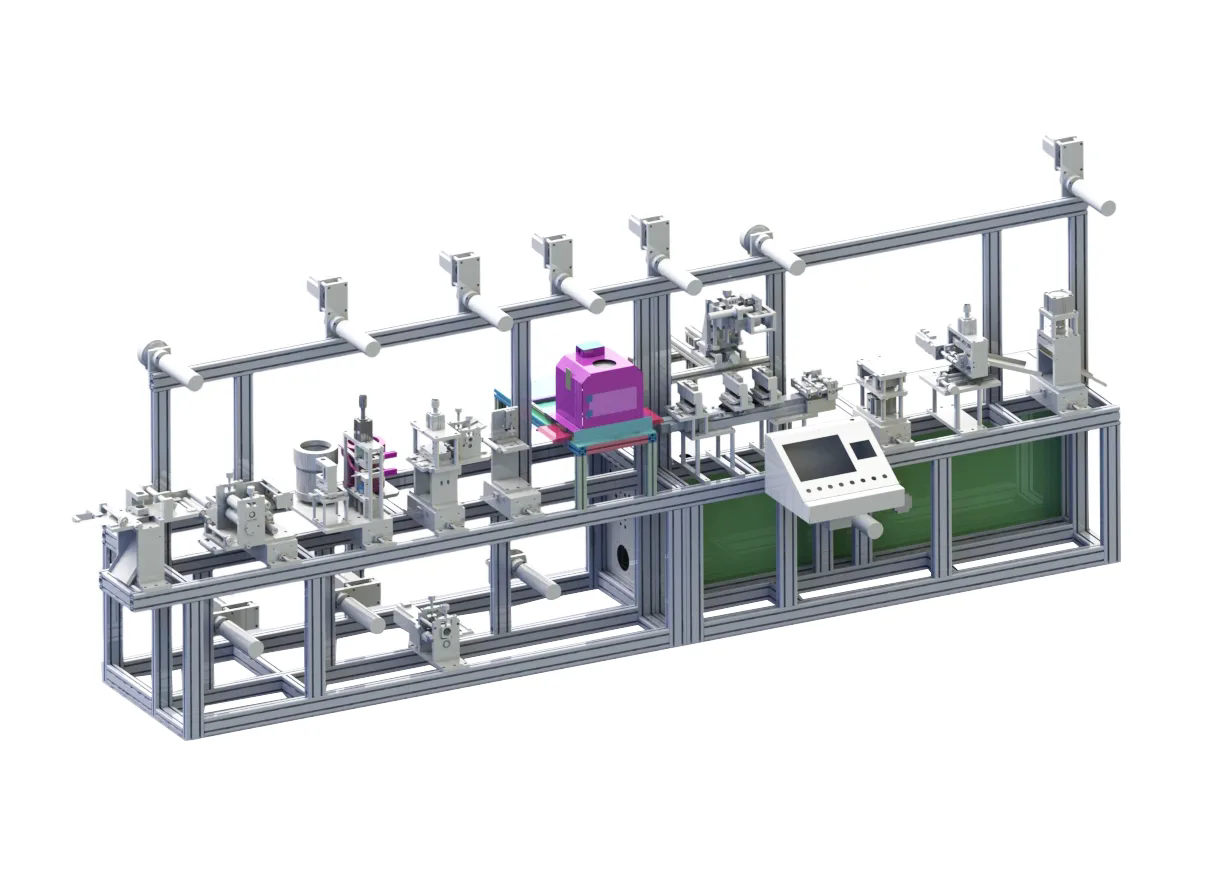
An ECG electrode production machine is specialized manufacturing equipment used to produce disposable electrodes and related medical adhesive electrode products. These electrodes are commonly used to establish contact between the patient's skin and ECG monitoring equipment so that electrical signals generated by the heart can be detected accurately.
Although an individual ECG electrode may appear simple, its manufacturing process requires controlled handling of multiple materials. Depending on the product design, the electrode can contain a conductive element, adhesive layer, hydrogel or other conductive medium, backing material, protective liner, connector or fastening component, and packaging structure.
Manual production can become difficult when manufacturers need to maintain consistent dimensions, adhesive positioning, dispensing quantity, cutting accuracy, and production speed. An automated ECG Electrode Production Machine integrates multiple operations into a coordinated manufacturing process, helping manufacturers reduce unnecessary manual handling.
Modern equipment may incorporate functions such as:
The exact configuration depends on the electrode structure, production volume, raw materials, dimensional requirements, and desired level of automation.
Medical consumable manufacturers often encounter similar production difficulties when electrode manufacturing relies heavily on manual operations. The challenge is not simply producing more units; manufacturers must maintain repeatable quality while controlling labor, material consumption, downtime, and production complexity.
Manual cutting and positioning can introduce variations in electrode shape, size, and component placement. Automated feeding and die-cutting mechanisms can provide much more repeatable processing conditions.
When operators perform feeding, cutting, assembly, dispensing, and inspection separately, the number of labor stations can increase rapidly. Automation combines multiple operations and reduces repetitive manual tasks.
Improper feeding, inaccurate cutting, excessive adhesive dispensing, and incorrect positioning can increase scrap. A properly engineered production system can optimize material utilization and provide more controlled processing.
If one process is significantly slower than the others, the entire production line may be constrained by that operation. Integrating processes into a synchronized system helps balance production flow.
A manual process may work for small orders but become increasingly difficult to manage when demand increases. Multi-row or multi-station configurations can provide a pathway toward higher production capacity.
The manufacturing sequence varies according to electrode design, but a typical automated process follows a logical material-flow structure.
Materials supplied in rolls or sheets are introduced into the machine through controlled feeding mechanisms. Automatic feeding helps maintain consistent material tension and positioning throughout production.
Different functional layers can be bonded together to create the required electrode structure. Controlled lamination is important because uneven bonding may affect appearance, handling, and downstream cutting.
Depending on the electrode design, adhesive, hydrogel, conductive material, or another functional compound may be applied to a specified area. Consistent dispensing is particularly important because excessive material can increase cost and contamination risk, while insufficient material may compromise product performance.
The laminated material is processed into the required electrode geometry. Rotary or precision die-cutting systems can produce repeated shapes at production speed while maintaining dimensional consistency.
Some electrode designs require additional components such as snaps, connectors, conductive elements, or fastening parts. Automated mechanisms can position and assemble these components according to the product design.
When the manufacturing process uses a material that requires curing, drying, or stabilization, the production line can incorporate the appropriate process stage before final handling.
After die cutting, unwanted matrix material must be removed without disturbing the finished electrodes. Automated waste stripping helps maintain a continuous production process.
Finished electrodes can then proceed to collection, counting, inspection, labeling, or packaging, depending on the production-line configuration.
A complete electrode manufacturing solution is generally not a single mechanical action. It is a combination of coordinated modules designed around the product's manufacturing sequence.
| Machine Function | Primary Purpose | Manufacturing Benefit |
|---|---|---|
| Material Feeding | Moves rolls or sheets through the production line | Improves feeding consistency |
| Lamination | Combines functional material layers | Creates a stable multilayer structure |
| Dispensing | Applies gel, adhesive, or other materials | Supports controlled material application |
| Die Cutting | Forms the electrode shape | Improves dimensional repeatability |
| Assembly | Positions and attaches components | Reduces manual assembly work |
| Waste Removal | Separates scrap from finished products | Supports continuous operation |
For high-volume manufacturing, the value of these functions comes from synchronization. A machine with excellent die-cutting accuracy but unstable feeding can still create production problems. Likewise, a high-speed feeding system is of limited value if dispensing or assembly becomes the bottleneck.
There is no universal machine configuration suitable for every electrode manufacturer. The correct selection should be based on the product structure and production objectives.
The right configuration should therefore be selected after evaluating product drawings, raw materials, target output, process requirements, and automation expectations rather than simply comparing machine prices.
Electrode manufacturing frequently involves multiple flexible and functional materials. The exact material combination depends on the electrode design.
Material compatibility is a critical consideration before purchasing equipment. A production line designed for one material combination may require adjustments when the adhesive viscosity, substrate thickness, liner structure, or electrode geometry changes.
For this reason, manufacturers should provide the machine supplier with actual material samples whenever possible. Testing the real production materials can reveal feeding, adhesion, cutting, dispensing, and stripping issues before equipment is finalized.
Automation provides value by reducing unnecessary process variation and improving the continuity of material flow. For ECG electrode manufacturers, several improvements are particularly important.
Servo-driven mechanisms, controlled feeding, automated positioning, and repeatable cutting parameters can reduce variation between production cycles.
Operators can focus more on machine supervision, material replenishment, quality checks, and process management rather than repeating every production action manually.
When process parameters and machine conditions are controlled systematically, manufacturers can more easily identify production abnormalities and establish consistent operating procedures.
Automated equipment provides a more predictable production rhythm, helping manufacturers estimate labor requirements, material consumption, and production capacity.
Every unnecessary manual transfer creates an opportunity for misalignment, contamination, damage, or handling errors. Integrated processing reduces the number of times materials need to be manually moved between stations.
Before selecting an ECG Electrode Production Machine, manufacturers should evaluate the entire manufacturing requirement rather than focusing on a single machine specification.
| Evaluation Area | Questions to Ask |
|---|---|
| Product Design | What are the electrode dimensions, shape, layers, and components? |
| Materials | Can the machine handle the actual substrate, adhesive, gel, liner, and conductive materials? |
| Production Volume | What daily, monthly, and annual output is required? |
| Automation | Which operations should be automatic and which require operator intervention? |
| Changeover | How frequently will product sizes or designs change? |
| Maintenance | Are wear parts accessible and can routine maintenance be completed efficiently? |
| Technical Support | Will installation, commissioning, operator training, and after-sales support be available? |
| Customization | Can the supplier modify the equipment for special electrode structures? |
A particularly important consideration is future production. If the product portfolio is expected to expand, a machine with suitable flexibility may provide greater long-term value than equipment optimized only for today's highest-volume product.
Xiamen Junssen Intelligent Technology Co., Ltd. focuses on the development and manufacture of automated equipment for electrode and medical consumable production. Its equipment portfolio covers different electrode manufacturing requirements, including single-row, double-row, special-shaped, wet-gel, multi-row, and smart wearable electrode production solutions.
According to the company's product information, its production systems can integrate processes such as automatic material feeding, lamination, coating or dispensing, die cutting, assembly, curing, waste removal, and other operations according to the specific machine configuration.
This type of integrated approach is particularly useful for manufacturers that want to replace fragmented production stations with a more coordinated workflow.
Junssen also provides customized automation solutions. This can be important when a standard machine does not completely match an electrode's geometry, material structure, component arrangement, or required production sequence.
The company describes its capabilities as including its own production and CNC machining facilities, engineering resources, equipment assembly, commissioning, and technical support. It also states that it provides OEM/ODM services for customized non-standard automation projects.
Purchasing the machine is only the beginning of its service life. Long-term production stability depends on proper installation, commissioning, preventive maintenance, operator training, and timely troubleshooting.
A practical maintenance program should include:
Operators should also understand the relationship between machine settings and product quality. For example, increasing production speed without confirming material tension, dispensing stability, or cutting performance can create downstream defects.
Preventive maintenance is therefore more effective than waiting for a component failure to interrupt production.
It is used to automate manufacturing processes for disposable ECG electrode pads and related medical adhesive electrode products. Depending on the configuration, it can perform feeding, lamination, coating, dispensing, die cutting, assembly, curing, waste removal, and other operations.
Yes. Equipment can be configured for standard, special-shaped, single-row, double-row, and multi-row electrode production. The appropriate tooling and machine structure depend on the product design.
Yes. Equipment configurations can be designed for hydrogel-based electrode products. Manufacturers should provide actual material specifications and samples so that feeding and dispensing requirements can be evaluated correctly.
Yes. Depending on the product structure, an integrated line can combine automatic feeding, lamination, dispensing or coating, die cutting, assembly, waste removal, and other production operations.
Yes. Customization is especially useful for unusual electrode geometries, special material combinations, unique component structures, or production processes that cannot be handled efficiently by standard equipment.
Start with the required finished-product output and work backward through the complete manufacturing process. Consider operating hours, changeover time, expected downtime, material losses, and the slowest production station rather than relying solely on the machine's theoretical speed.
Provide product drawings, electrode dimensions, material specifications, roll widths, adhesive or gel characteristics, required output, automation expectations, packaging requirements, and any existing process information. More complete technical information generally leads to a more accurate equipment proposal.
Testing confirms whether the actual materials and product structure are compatible with the proposed feeding, dispensing, laminating, cutting, and assembly processes. It can also identify tooling or configuration adjustments before mass production begins.
An ECG electrode production machine can transform a labor-intensive electrode manufacturing process into a more organized and repeatable automated workflow. By integrating material feeding, lamination, coating or dispensing, die cutting, assembly, waste removal, and other operations, manufacturers can address common challenges involving labor requirements, material waste, inconsistent processing, production bottlenecks, and capacity expansion.
The best machine is not necessarily the one with the highest theoretical production speed. The more important question is whether the complete system matches the electrode design, material characteristics, required output, changeover frequency, quality expectations, and future production plans.
For manufacturers considering a new ECG electrode production line, Xiamen Junssen Intelligent Technology Co., Ltd. offers multiple equipment configurations and customized automation solutions for different electrode manufacturing requirements. Its product range and engineering capabilities allow production systems to be designed around specific manufacturing processes rather than relying exclusively on a one-size-fits-all configuration.
Ready to improve your electrode manufacturing process? Share your electrode drawings, material specifications, production targets, and automation requirements with Xiamen Junssen Intelligent Technology Co., Ltd. to discuss a suitable production solution. Contact us for technical consultation, equipment configuration, and customized ECG electrode production automation support.
Copyright © 2026 Xiamen Junssen Intelligent Technology Co., Ltd. All Rights Reserved.
Links Sitemap RSS XML Privacy Policy