

Copyright © 2026 Xiamen Junssen Intelligent Technology Co., Ltd. All Rights Reserved.
Links Sitemap RSS XML Privacy Policy
Article Summary: A Therapeutic Electrode Production Machine is designed to help manufacturers produce consistent, reliable, and scalable electrode pads for physiotherapy, rehabilitation, muscle stimulation, sports recovery, home healthcare, and related applications. As electrode products become more diversified, manufacturers face practical challenges involving material handling, coating consistency, lamination, die cutting, assembly, waste removal, and production efficiency. The right production equipment can integrate these processes into a more controlled workflow, reducing unnecessary manual operations while improving repeatability. This article explains how therapeutic electrode manufacturing equipment works, what production problems it can solve, how to select a suitable configuration, and how Junssen supports customized electrode production solutions.
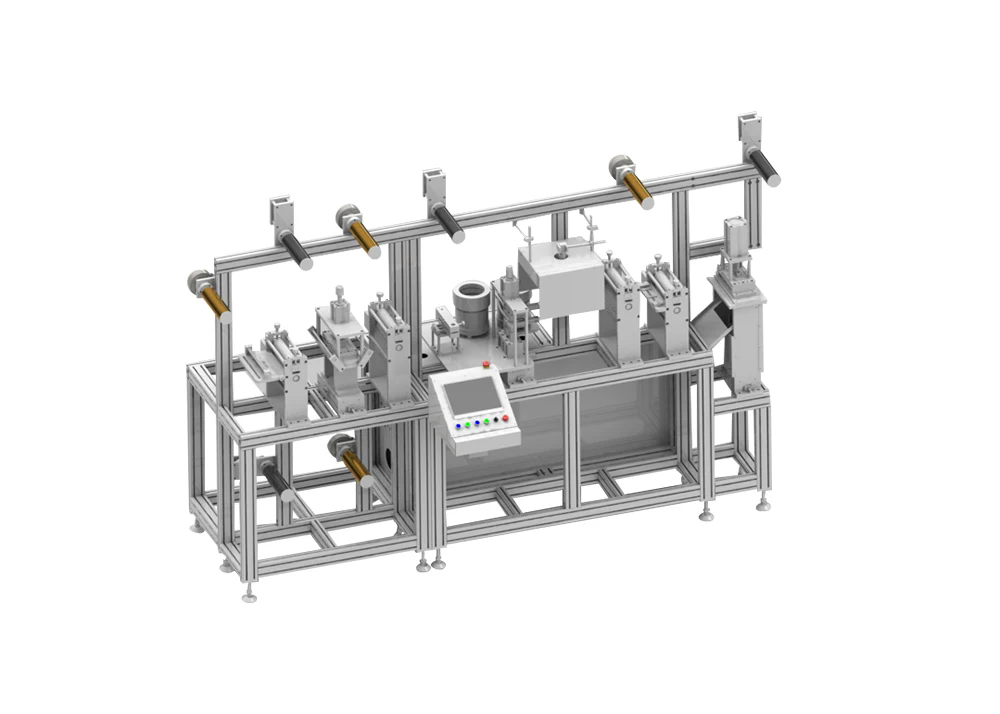
A Therapeutic Electrode Production Machine is specialized manufacturing equipment used to produce electrode pads for therapeutic and stimulation-related applications. Depending on the product design, the finished electrodes may be used in physiotherapy devices, rehabilitation systems, muscle stimulation equipment, sports recovery products, household healthcare equipment, or other treatment-oriented devices.
Unlike a simple cutting machine, a modern production system can combine several manufacturing operations. Depending on the configuration, these operations may include material feeding, coating, laminating, precision cutting, waste stripping, electrode assembly, and packaging.
This integrated approach is important because therapeutic electrodes are typically multilayer products. Their performance depends not only on the conductive portion but also on the interaction between the backing material, adhesive or hydrogel layer, conductive component, protective liner, connector, and other structural elements.
Junssen provides therapeutic electrode manufacturing solutions for different product structures, including snap-type and wire-type electrode pads. Its equipment portfolio also includes solutions designed for high-volume production, smaller electrode formats, and integrated automated processing.
Therefore, the best machine is not necessarily the one with the highest theoretical speed. It is the machine whose feeding, coating, cutting, assembly, and automation functions match the actual electrode structure and production requirements.
Manufacturers often begin electrode production with manual or semi-manual processes. This may be practical for prototypes or low-volume orders, but production becomes more difficult when demand increases.
Several problems can appear simultaneously:
Automation addresses these issues by controlling repetitive operations through defined mechanical and process parameters. Instead of depending heavily on individual operators for every production step, manufacturers can establish a repeatable workflow.
This is particularly valuable when a factory produces thousands or millions of electrode pads with the same dimensions. Stable feeding, positioning, cutting, and assembly can reduce variation and make production management easier.
The exact manufacturing sequence varies according to electrode construction. However, a typical automated therapeutic electrode production workflow can be understood through several core stages.
Raw materials are introduced into the production line in a controlled manner. Depending on the product, these may include flexible backing materials, conductive materials, adhesive layers, hydrogel-related materials, release liners, foam, non-woven materials, or other components.
Stable feeding is essential because even a small deviation at the beginning of the process can influence subsequent lamination and cutting accuracy.
For electrode products that require a conductive adhesive or hydrogel layer, controlled coating is an important production stage. The objective is to achieve a consistent coating pattern and appropriate material distribution across the intended working area.
Uneven application can create product inconsistencies, increase material consumption, or affect subsequent processing. Therefore, coating control should be considered when designing a complete electrode manufacturing solution.
Multiple layers may need to be combined to create the final electrode structure. Lamination brings these layers together while maintaining alignment.
For flexible medical-related materials, excessive pressure or poor alignment can cause deformation. A properly configured system should therefore account for material characteristics rather than treating every substrate in the same way.
Die cutting transforms the laminated web or sheet into individual electrode shapes. The cutting process determines the final dimensions and geometry of the electrode pad.
Accurate cutting is especially important for products with connectors, snap buttons, wires, or defined conductive areas because incorrect positioning may interfere with later assembly.
After die cutting, unwanted material surrounding the electrode pads may need to be removed. Automated waste stripping can reduce manual intervention and prepare individual products for the following assembly stage.
Depending on the product design, assembly may involve snap components, wires, conductive parts, or other functional elements. Automation can help control the position and sequence of these operations.
For integrated production lines, packaging can also become part of the automated workflow. Combining several stages can reduce repeated handling and create a more continuous production process.
A therapeutic electrode machine should be evaluated as a complete manufacturing system rather than by one specification alone. The following functions are commonly important:
| Production Function | Purpose | Manufacturing Benefit |
|---|---|---|
| Material Feeding | Moves raw materials through the line | Improves process continuity |
| Coating | Applies adhesive, hydrogel, or functional layers | Supports more consistent material distribution |
| Lamination | Combines multiple material layers | Improves structural consistency |
| Die Cutting | Forms the electrode shape | Improves dimensional repeatability |
| Waste Stripping | Removes excess surrounding material | Reduces manual handling |
| Assembly | Installs wires, snaps, or other components | Creates a more streamlined workflow |
| Packaging | Prepares finished products for subsequent handling | Supports continuous production |
Not every manufacturer needs every function. A factory producing a simple electrode pad may require a different configuration from a high-volume manufacturer producing multiple electrode structures.
The most valuable production machine is one that addresses actual manufacturing bottlenecks. Several common problems deserve particular attention.
Manual production can become a major bottleneck when order volume increases. Operators may need to repeatedly position materials, cut shapes, attach components, and transfer products.
Automation can move these repetitive tasks into a controlled production sequence, allowing personnel to focus more on supervision, inspection, material preparation, and production management.
Electrode pads may be produced in different shapes and sizes. Manual cutting can introduce variation, especially during long shifts.
Precision die-cutting equipment provides a more repeatable method for forming electrode geometries, helping manufacturers maintain consistent dimensions across production batches.
Flexible medical materials can represent a meaningful portion of production costs. Poor nesting, inaccurate cutting, and repeated handling can increase scrap.
A properly designed production system can improve material utilization by controlling feeding and cutting operations more systematically.
Therapeutic electrodes are not a single standardized product. Some products use snaps, while others use wires. Some require larger pads, while pediatric or specialized applications may require smaller formats.
This makes flexibility important. A customized production machine can be configured around the manufacturer's actual product structure instead of forcing every product into the same manufacturing process.
Different electrode products require different production approaches. Junssen's product range illustrates several possible configurations, including hydrogel electrode equipment, snap therapeutic electrode machines, wire-type equipment, semi-automatic systems, and more integrated production solutions.
For standardized products with substantial demand, a dual-row configuration can increase output by processing multiple product tracks within the production system.
This approach can be useful when the electrode geometry is stable and production volume justifies a higher-throughput configuration.
Snap-type electrodes require accurate positioning of the button component. Automation can help reduce positioning variation and minimize manual operations involved in forming the electrode.
Junssen offers snap therapeutic electrode production solutions intended for different single-row and multi-row electrode specifications.
Wire-type electrodes introduce additional assembly requirements. The wire must be positioned and connected consistently with the electrode structure.
A dedicated wire-type production configuration can be more suitable than adapting generic cutting equipment to a product that requires additional assembly steps.
When manufacturers need a more automated workflow, an integrated system can combine coating, lamination, die cutting, waste stripping, assembly, and packaging.
This approach can reduce intermediate handling and create a more continuous production process. Junssen describes integrated configurations that combine multiple electrode manufacturing stages in one automated solution.
Material compatibility is one of the most important considerations when purchasing electrode manufacturing equipment. Different electrode designs may use different combinations of flexible and functional materials.
Junssen indicates that therapeutic electrode production equipment can accommodate different flexible materials, including hydrogel, silicone, non-woven fabric, foam, and other low-irritation material options, depending on the machine configuration and product requirements.
Before selecting a machine, manufacturers should provide the equipment supplier with actual material samples and product drawings whenever possible. This allows the supplier to evaluate feeding, coating, lamination, cutting, and assembly requirements more accurately.
Therapeutic electrodes and ECG electrodes may look similar from a general manufacturing perspective, but their production objectives can be different.
| Comparison Factor | Therapeutic Electrode Production | ECG Electrode Production |
|---|---|---|
| Primary Application | Physiotherapy, rehabilitation, stimulation, recovery | Electrocardiogram monitoring and diagnostic applications |
| Product Variety | Often includes wired, snap, hydrogel, silicone, and specialized formats | Typically focused on standardized diagnostic electrode formats |
| Material Requirements | May involve a wider range of flexible materials | Often uses defined diagnostic electrode materials |
| Production Focus | Flexibility, comfort, adhesion, and production efficiency | Consistency and requirements associated with diagnostic electrodes |
| Customization | Often requires multiple product configurations | May emphasize standardized product structures |
The appropriate machine should therefore be selected according to the intended electrode application rather than simply choosing equipment based on the general term “electrode production machine.”
Choosing equipment solely according to advertised production speed can lead to problems later. A more practical evaluation should begin with the product itself.
Determine whether the product is a snap-type, wire-type, hydrogel, silicone, or another construction. Identify the number of layers and functional components.
Provide electrode length, width, shape, thickness, connector location, and other important dimensional information. Multiple product sizes should be identified at the beginning of the equipment selection process.
Estimate daily, monthly, and annual output requirements. A small-volume producer may benefit from semi-automatic equipment, while a large manufacturer may need a multi-row or fully integrated system.
Discuss material thickness, flexibility, adhesive behavior, release properties, coating requirements, and other characteristics with the machine supplier.
If the factory plans to introduce new electrode sizes or structures, equipment flexibility becomes more important. A slightly more adaptable system may provide greater long-term value than a machine optimized for only one product.
Production equipment should be practical for the operators who will use it every day. Accessible components, understandable controls, straightforward adjustment procedures, and reasonable maintenance requirements can affect long-term operating efficiency.
When possible, manufacturers should request sample testing using their actual materials. This provides more useful information than relying only on general specifications.
Consistent electrode production depends on more than the machine itself. The manufacturing system should combine equipment configuration, material control, process parameters, inspection, and operator procedures.
Automation is most effective when it is integrated into a disciplined production process. A sophisticated machine cannot compensate for uncontrolled materials or unclear product specifications.
Junssen is a China-based manufacturer and supplier of electrode production equipment and customized automation solutions. Its therapeutic electrode equipment is positioned for applications including clinical rehabilitation, sports recovery, household healthcare, pediatric physiotherapy, beauty-related equipment, and other therapeutic or stimulation-oriented applications.
One advantage of working with a specialized equipment manufacturer is the ability to discuss the complete production process rather than purchasing an isolated machine. The product structure, material characteristics, desired output, automation level, and future production plans can all influence the final configuration.
Junssen provides multiple therapeutic electrode machine configurations, including solutions for snap electrodes, wire-type electrodes, hydrogel electrodes, semi-automatic production, and integrated production processes.
For manufacturers with special requirements, customization can also be important. A machine designed around the customer's electrode dimensions and manufacturing sequence may be more practical than modifying a standard machine after installation.
It is used to manufacture electrode pads for applications such as physiotherapy, rehabilitation, muscle stimulation, sports recovery, household healthcare, and related therapeutic equipment. Depending on the configuration, the machine can process different electrode structures and flexible materials.
Many production systems can be configured or adjusted for different electrode dimensions, but the actual range depends on the machine structure, tooling, feeding system, and product specifications. Manufacturers should confirm the required size range with the equipment supplier before purchasing.
Snap electrodes use a button-style connection, while wire-type electrodes incorporate a wire connection. Their assembly requirements are therefore different, and dedicated or suitably configured production equipment can improve manufacturing consistency.
No. The appropriate automation level depends on production volume, labor availability, product complexity, budget, and future growth plans. Semi-automatic equipment may be practical for smaller production volumes, while high-volume factories can benefit from more integrated automation.
Yes, suitable production systems can integrate processes associated with hydrogel electrode manufacturing. However, coating behavior, material properties, product dimensions, and production requirements should be evaluated before finalizing the equipment configuration.
Waste can be reduced through controlled material feeding, optimized cutting layouts, stable coating processes, accurate die cutting, proper tooling maintenance, and effective process control.
Useful information includes electrode drawings, dimensions, materials, layer structure, connection type, target production capacity, desired automation level, product variations, and packaging requirements. Providing physical samples can also help the supplier evaluate the production process.
Junssen provides customized automation solutions for therapeutic electrode manufacturing and offers different equipment configurations according to product structure, material characteristics, and production requirements.
A Therapeutic Electrode Production Machine can play a central role in building a more stable and scalable electrode manufacturing process. Instead of relying on disconnected manual operations, manufacturers can integrate material feeding, coating, lamination, die cutting, waste stripping, assembly, and packaging into a controlled workflow.
The most important consideration is not simply machine speed. Product structure, material compatibility, dimensional requirements, production volume, automation level, changeover needs, maintenance, and future expansion should all be evaluated together.
For manufacturers producing snap, wire-type, hydrogel, pediatric, rehabilitation, sports recovery, or other therapeutic electrode products, a properly configured production system can help reduce repetitive manual work, improve process consistency, and create a stronger foundation for increasing production capacity.
With multiple equipment configurations and customized automation capabilities, Junssen can work with manufacturers to develop a production solution based on their actual electrode structure and manufacturing requirements. If you are planning a new electrode production line, upgrading existing equipment, or looking for a more efficient way to manufacture therapeutic electrode pads, contact us to discuss your product specifications, production targets, and customized equipment requirements with Junssen.
Copyright © 2026 Xiamen Junssen Intelligent Technology Co., Ltd. All Rights Reserved.
Links Sitemap RSS XML Privacy Policy