

Copyright © 2026 Xiamen Junssen Intelligent Technology Co., Ltd. All Rights Reserved.
Links Sitemap RSS XML Privacy Policy
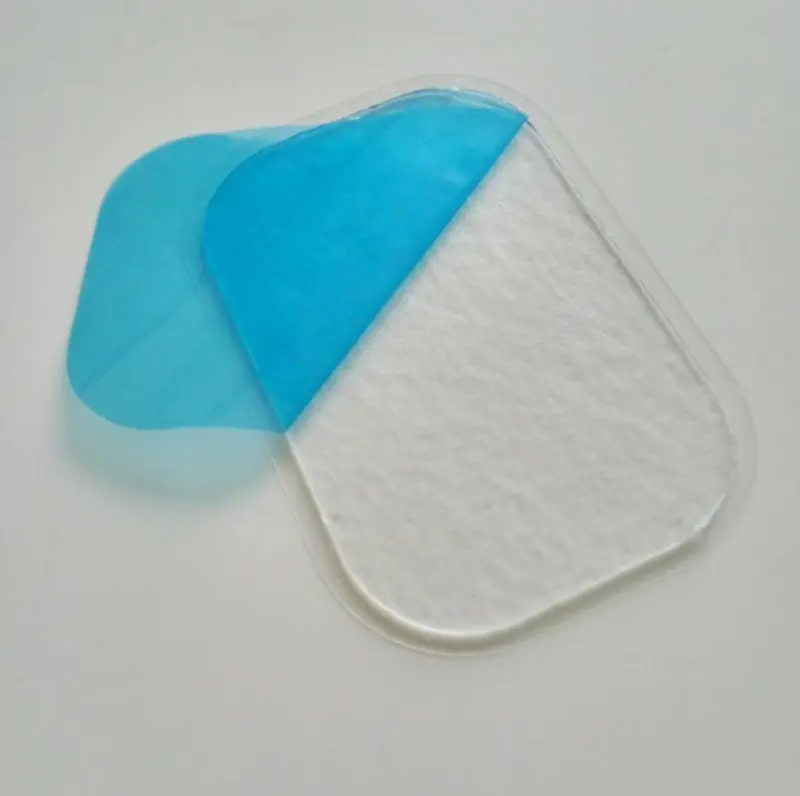
Hydrogel is widely used in medical electrode pads, TENS electrodes, ECG electrodes, cosmetic patches, and other skin contact products. A good hydrogel is normally transparent, translucent, or has a stable and uniform appearance. However, some manufacturers may notice that the material gradually turns yellow during production or storage.
Hydrogel yellowing does not always mean that the product has failed, but it should not be ignored. A change in color can be related to oxidation, excessive heat, raw material quality, formulation compatibility, equipment contamination, or improper storage conditions. In some cases, the same factors may also affect adhesion, conductivity, moisture retention, and shelf life.
Understanding the cause of hydrogel discoloration is therefore important for maintaining consistent product quality.
Oxidation is one of the most common reasons for hydrogel yellowing.
Some ingredients in a hydrogel formulation can react with oxygen during mixing, coating, storage, or transportation. As these components gradually oxidize, the color may change from clear or light-colored to yellow.
The problem can become more noticeable when the material is exposed to air for an extended period. A hydrogel that looks normal immediately after production but becomes yellow after several days or weeks may require particular attention to oxygen exposure and packaging.
For manufacturers, reducing unnecessary exposure to air during production and storage can help improve color stability.
Temperature has a direct influence on hydrogel stability.
Depending on the formulation, hydrogel may go through heating during mixing, coating, curing, or drying. If the temperature is higher than necessary, or the material remains at high temperature for too long, some components may degrade or oxidize.
This can cause more than a simple color change. Excessive heat may also affect:
Adhesive strength
Moisture content
Viscosity
Gel structure
Electrical conductivity
For this reason, manufacturers should establish a suitable processing temperature instead of increasing the temperature simply to speed up production.
In many cases, stable control of temperature and processing time is more important than using a high processing temperature.
The stability of finished hydrogel depends heavily on the quality of its raw materials.
Hydrogel formulations may contain polymers, water, humectants, electrolytes, crosslinking agents, preservatives, and other additives. If one of these materials has already started to oxidize or has poor color stability, the finished product may show yellowing.
Batch-to-batch variation can also be a problem. If a production line suddenly produces yellow hydrogel while the process parameters have not changed, comparing the current raw material batch with previous batches can be a useful starting point.
Manufacturers should keep records of raw material batches, appearance, storage conditions, and shelf life.
Hydrogel is a multi-component system. Different ingredients can interact with each other during processing and storage.
Changes in pH, ionic strength, crosslinking conditions, or interactions between additives may affect the stability and appearance of the material.
This is why adding another chemical simply to make the hydrogel look whiter is not always a good solution. The additional ingredient may change the hydrogel's adhesion, conductivity, skin compatibility, or storage stability.
For medical applications, formulation changes should be evaluated carefully before being introduced into production.
Metal ions can also contribute to discoloration in certain hydrogel formulations.
During manufacturing, the material may come into contact with mixing tanks, agitators, storage containers, pipelines, coating heads, scrapers, and other machine components. If unsuitable materials are used, metal ions may migrate into the hydrogel and influence chemical reactions.
For this reason, product-contact surfaces should be selected according to the formulation and application.
For medical hydrogel production, stainless steel is commonly considered for equipment contact parts, but the actual material selection should still be based on chemical compatibility, corrosion resistance, and the requirements of the specific formulation.
Light exposure is another factor that can accelerate degradation in some hydrogel systems.
Direct sunlight, UV exposure, high temperatures, and unsuitable humidity conditions can reduce the stability of the material over time.
Packaging also plays an important role. If the packaging allows excessive oxygen or moisture exchange, the hydrogel may change during storage even when the production process itself is stable.
Therefore, both the packaging material and warehouse conditions should be considered when investigating long-term yellowing.
Preventing hydrogel discoloration starts with controlling the complete production process rather than focusing on one individual step.
Use raw materials with consistent quality and establish clear incoming inspection requirements.
Manufacturers can check parameters such as:
Appearance
Color
Purity
Batch consistency
Storage conditions
Expiration date
If a yellowing problem suddenly appears, the raw material batch should be one of the first things to investigate.
Avoid unnecessary high temperatures and long heating times.
The ideal processing window should be determined through testing of the actual formulation. Mixing temperature, heating time, and mixing speed should be controlled consistently from batch to batch.
Automatic temperature monitoring can also help prevent accidental overheating during continuous production.
If oxidation is identified as a major cause, reducing contact with air may improve hydrogel stability.
Depending on the formulation and manufacturing process, manufacturers can consider:
Closed mixing systems
Sealed storage tanks
Shorter exposure time
Properly sealed containers
Light-resistant packaging
These measures should be combined with stability testing to confirm their effectiveness.
The equipment itself should not become a source of contamination.
For hydrogel production equipment, manufacturers should inspect all product-contact parts, including the mixing system, transfer pipes, storage tank, coating head, and scraper.
For medical electrode pad production, equipment cleanliness and material compatibility are particularly important because the hydrogel will eventually come into contact with the skin.
A suitable packaging solution can significantly improve the storage stability of hydrogel.
Depending on the product requirements, packaging may need to provide protection against oxygen, moisture loss, light, and temperature fluctuations.
Finished hydrogel products should also be stored under controlled conditions and protected from direct sunlight and excessive heat.
When hydrogel turns yellow, changing several production parameters at the same time makes troubleshooting difficult.
A better approach is to conduct a simple comparative test.
For example, manufacturers can divide the same batch into several samples:
|
Sample |
Condition |
Purpose |
|
A |
Sealed at room temperature |
Reference sample |
|
B |
Exposed to air |
Check oxidation |
|
C |
Stored at elevated temperature |
Check thermal stability |
|
D |
Exposed to light |
Check light sensitivity |
The appearance can then be recorded at different intervals, such as 24 hours, 3 days, 7 days, and 14 days.
For medical electrode hydrogel, it is also useful to check whether yellowing is accompanied by changes in adhesion, electrical conductivity, moisture content, viscosity, or pH.
This helps determine whether the problem is only visual or indicates a deeper change in product performance.
Copyright © 2026 Xiamen Junssen Intelligent Technology Co., Ltd. All Rights Reserved.
Links Sitemap RSS XML Privacy Policy